Posted by Michael Haran on Sep 18, 2013
Press Democrat 9/16/2013
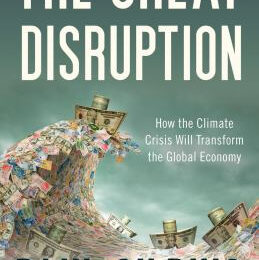
Wow! Talk about organic and close to home. I have just finished reading a book entitled “The Great Disruption” by Paul Gilding who was CEO of Greenpeace for 20 years and is now a sustainability consultant to multinational companies.
In Sunday’s PD there were four articles: “Contrarians’ Viewpoint” states that in the worst case scenario there will be “jarring financial chaos” and a steady decline in global living standards caused by unsustainable debt and the end of cheap oil; a “Close to Home” article by Jane Vosburg pointed out that to avoid global catastrophe and preserve the planet we need to stop the fossil-fuel companies from spewing CO2 into the atmosphere and convert to sustainable energy sources; a Paul Krugman article “Failed policy wrought years of tragic waste” on how a lack of government stimulation caused a slowdown in economic growth and unnecessary unemployment; and an article “Vote near on energy zoning changes” on Sonoma County renewable energy development.
All of these articles touch on points covered in the book. Global warming caused by CO2 is real and it will eventually make our planet uninhabitable; “Peak oil” will make fossil fuels so expensive it will collapse the world economy; the world’s growth economy is fast using up the planet’s resources; we need a new system that will provide for near full employment; we have to build communities
that can function in an era of limits; and it will take geopolitical action to convert to sustainable energy sources.
Gilding argues that what we have to do is change from a growth economy to a steady-state economy which is not predicated on retail shopping. The reasoning goes that by converting from a consumption growth economy we will stop chasing our tails in the pursuit of more and more stuff and spend the extra time we will have giving back to the community thus creating a better quality of life. He states that studies show that this type of life style will make us happier since we will have to work less and our creative free time will promote the positive evolution of mankind. Taggart feels the best place to be when this social upheaval happens is in Sebastopol.
A steady-state economy would convert a majority of jobs from growth oriented companies to cooperatives. Cooperatives now employ one hundred million people worldwide 20 percent more that multinational companies.
As Taggart, Martenson and Vosburg point out “peak oil” and continued CO2 emissions will collapse the global economy and destroy our planet as we know it. If we let this ecological and economic collapse happen Gilding says it will take an effort as massive as America’s entrance into WWII to save the planet. Fossil fuel companies will have to be wiped out and replaced with an enormous investment in sustainable fuel sources.
The alternative, as all sources point out, is to start the conversion off fossil fuel and change our life styles now. We need to divest ourselves from non-sustainable energy companies and invest in companies that could produce innovative solutions. For example, Freecycle Network’s seven million members give away unwanted useful goods to each other which reduces landfill waste and the need to buy new stuff. In Australia, the 1 Million Women Campaign was founded with the idea that since women make 70 percent of the consumer decisions they should take the lead in reducing carbon emission by taking simple easy steps.
In planning for local renewable energy development Sonoma County supervisors and city councilpersons seem to be providing the stated leadership that will be necessary to survive and transcend The Great Disruption.
Read More
Posted by Michael Haran on Sep 16, 2013
Healdsburg Tribune 9/12/2013
By Michael Haran
One of the reasons so many people in Healdsburg say “we are so lucky to live here,” is the Healdsburg Museum. On a par with the city’s beloved library, the Museum is a keeper of the community’s culture.
Since this is about the Museum let’s start with a little history. The earliest collection in the City archives was begun in the 1920s, when Julius Myron Alexander (1880-1930), a great-nephew of early settler Cyrus Alexander, collected materials and began writing about city history.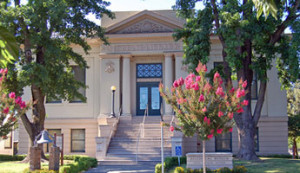
In 1976 Ed Langhart, a retired city manager, was appointed by the Healdsburg City Council as the City’s first Historian and Archivist and helped found the Healdsburg Historical Society. The first museum was installed in a city-owned storefront building near the Plaza.
The Historical Society became a non-profit corporation in 1977 with volunteers staffing the Museum. In 1987, when the Healdsburg Library moved from the Carnegie Library building on Matheson Street to its new building on Piper Street, the Historical Society raised over $558,000 (bolstered by a $110,000 matching grant from Mr. and Mrs. Edward H. Gauer) to restore and retrofit the 1910 neo-classical revival structure. In 1990, the building reopened as the Healdsburg Museum & Historical Society. Listed on the National Register of Historic Places, it is not only the keeper of the Healdsburg community’s history but also a part of that history.
Due to several years of budget constraints, in 1993 the City of Healdsburg eliminated almost all funding and it looked like the City’s Museum would have to close. In order to save it, the Historical Society stepped in and took over responsibility for managing the Museum. The City still pays for some utilities, supports maintenance of the building and grounds, and owns the historical collections.
The museum had to rely on volunteers (which it still does) until additional funds were raised and a Curator hired in 1995. Since there was (and is – other than what’s mentioned above) no public funding, the first curators and Board went about the task of organizing annual fund raisers to support the museum and started an Endowment Fund. Many of these fund raisers, which are the life blood of the museum, have proven quite popular.
Today the Museum is managed by Holly Hoods and Assistant Curator Meredith Dreisback and Board President Stan Becker. Under their stewardship, and a committed community-based volunteer group of over 100 people, including a Board of Directors, the Museum’s services to the community have expanded, and more are planned.
For example, four free topical local history exhibits are displayed each year. The current exhibit, “Movie Stars Next Door,” a tribute to Fred MacMurray and June Haver, who owned a ranch on Westside Road, has proven so popular that it has been extended into October. A new exhibit, “Farm to Table” opened August 7th and Nydia Goode’s antique dollhouse, on loan for a year, is not to be missed.
The Museum houses the archives of the community’s history, including oral history recordings of local elders, and curates historically significant objects, safekeeping them for future generations. Personalized local history and genealogical research is provided by professional historians and the Museum sponsors internships for students from local high schools, colleges and universities.
For the past several years the Museum has been creating a searchable database of over 16,000 local history photos which is an amazing local resource. Another valuable resource has been the creation of an index of local newspapers dating back to the 1850s. The Museum’s quarterly history journal, the Russian River Recorder, is devoted to local history articles written by Holly and a talented assortment of researchers and local residents.
The Museum provides free school tours and many free or low cost educational events for students such as the ongoing partnership with Latino youth from Healdsburg High School in the annual Dia de los Muertos exhibit at the Museum, and the annual Mexican heritage fair in the Plaza, which this year is on September 22nd.
The annual budget is completely raised by contributions. Approximately 25% comes from membership dues, 35% from events and 20% from donations. The rest comes from Museum services such as research and historic photo sales. Some of the Museum’s more popular fundraisers are the annual “Instant Wine Cellar,” the “History Lives Pioneer Dinner,” and the “Antique Faire” of which the Museum recently assumed management.
Throughout the year special fundraising events are hosted by “angel” members. For example, the recent “Georgetown Tour and Barbeque” at the famous Wild West Village and Hollywood memorabilia collection in Graton was underwritten by the Fred and June MacMurray Foundation, so all the proceeds went to the Museum, thanks to Kate MacMurray. The sold out “Evening at MacMurray Ranch” featured ranch tours, and the screening of the Fred MacMurray film “The Egg and I.” A new fund raiser is the September 21st Heirloom Tomato Festival, hosted by the Healdsburg Senior Living Community on Grove Street.
Some members support the Museum by volunteering their talents like the local craftsmen who help create the exhibits and the Healdsburg Tribune who runs the weekly “A look back at Local History” and prints announcements about the Museum’s events and activities. Other local merchants advertise in the Museum’s monthly newsletter “The Review” and still other volunteer. And we can’t forget all the great local wineries that contribute the wine for the Instant Wine Cellar event.
The museum has just over 650 members and according to Stan Becker, the Museum Board president, membership is growing at about 2% per year (16 new members were listed in the Review this month). Annual dues range from a low of $30 to a high of $1,000 or more depending on the member’s circumstances.
With more funding the Museum could check off several items on its wish list like climate controlled storage facilities, virtual exhibits and the acquisition of new artifacts.
History is a magical thing. With a little imagination it can extend one’s life many years. The Museum is a wonderful community resource and everyone who can, should join. It’s educational, it’s fun and you’ll meet some great people.
Read More